How Reputation Management Moves Your Dental Practice to the Top of the List
How Reputation Management Moves Your Dental Practice to the Top of the List
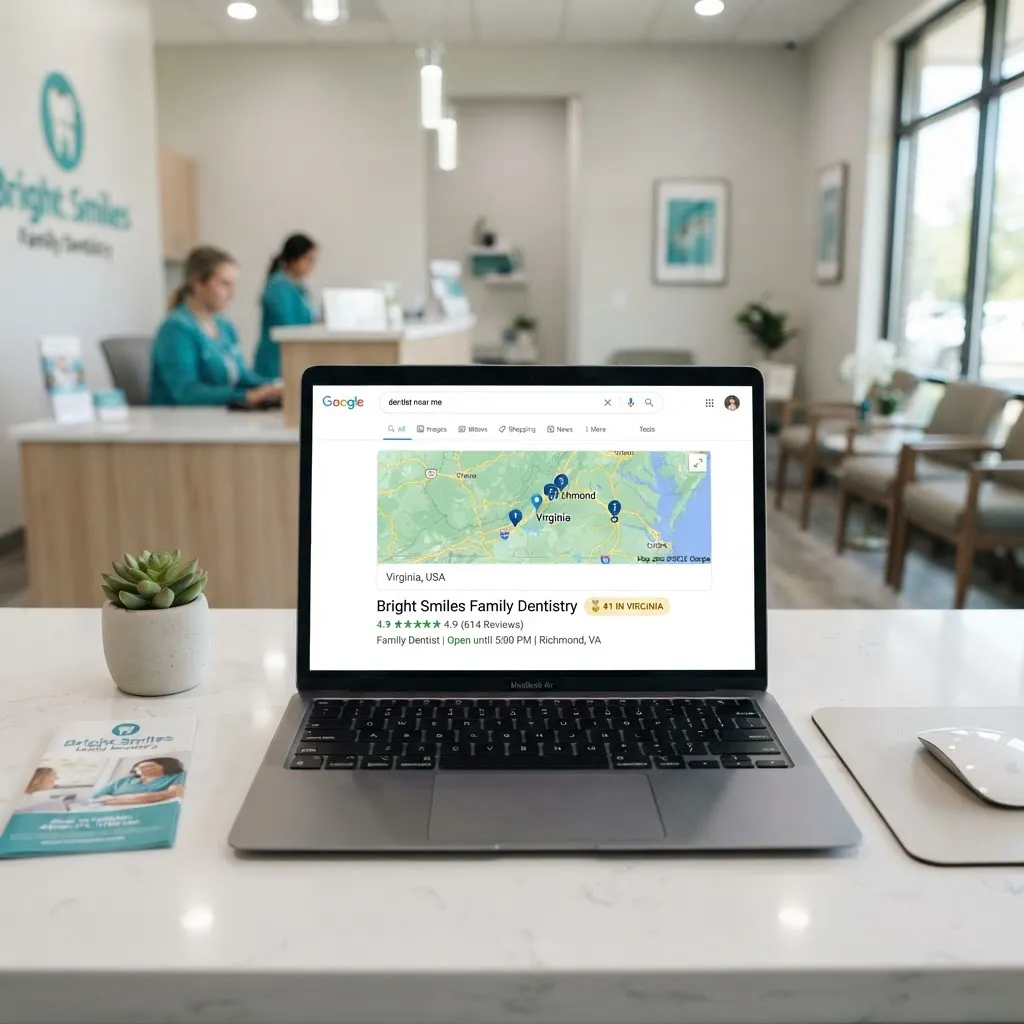
Picture a new patient with a throbbing molar. They type "dentist near me" into their phone, glance at three names on the map, and tap the one with 4.9 stars and a review from yesterday. The whole decision takes less time than it takes to brush their teeth. If your practice wasn't one of those three names, you never had a chance.
Your clinical skill, your new equipment and your friendly team don't matter if a patient never gets far enough to experience them. Before they ever pick up the phone, most people have already judged your practice by its star rating, how many reviews it has, how recent they are and how you respond to criticism.
The good news: reputation isn't luck. Practices that manage it actively, every week, climb higher in search results and win more of the patients who find them.
The numbers at a glance
97% of consumers read reviews before choosing a local business.
72% look at three or fewer businesses before deciding.
4 of the top 15 Google map ranking factors are review signals.
The decision happens before the phone ever rings
Patients decide fast and compare only a handful of options. Your reviews are often the deciding factor.
What patients do | The data |
|---|---|
Read reviews before choosing a local business | 97% of consumers (BrightLocal, 2026) |
Compare only a few options | 72% look at three or fewer businesses before deciding (BrightLocal, 2026) |
Use reviews when looking for a new dentist | 67% of people looking for a new dentist, with Google the top platform (DentistryIQ) |
Care most about recent reviews | 74% only care about reviews from the last three months (BrightLocal 2026, as reported by MySocialPractice) |
Set a minimum star rating | 31% will only use a business rated 4.5 stars or higher, up from 17% in 2025 (same source) |
Put together, the picture is clear. If your practice has a 4.1 rating, a handful of reviews and nothing new since last spring, many patients will cross you off before they ever see your website. A competitor with a 4.8 and a review from last week gets the call instead.
Reviews are your ticket into Google's top three
Reviews don't just persuade patients once they find you. They help decide whether patients find you at all.
Google ranks local results on three things: relevance, distance and prominence. On prominence, Google's own help page is direct. Review count and review score factor into local ranking, and more reviews and positive ratings can improve your position (Google Business Profile Help). Google also says replying to reviews shows you value feedback and helps your business stand out.
Local SEO experts agree. In Whitespark's 2026 Local Search Ranking Factors survey, four review signals rank in the top 15 factors for Google's map results (Whitespark):
A high Google star rating (4–5 stars), ranked #6
The number of Google reviews with written text, ranked #9
How recent your reviews are, ranked #11
A steady stream of reviews over time rather than bursts, ranked #14
The report also notes that review signals gained importance in 2026. You can't move your office closer to every patient. But you can control your reviews, and that's one of the strongest levers you have to climb the map rankings.
The four habits of top-rated practices
Reputation management isn't a one-time push. It's four habits kept up every week.
Habit | Why it matters | A good target |
|---|---|---|
Steady review volume | Google rewards a sustained flow of reviews, not a burst followed by silence | New reviews every week |
Recency | Patients and Google both discount old reviews | At least one new review in the last 30 days, always |
A strong rating | Many patients filter out practices below 4.5 stars | 4.5 stars or higher |
Responding to every review | Shows prospects you listen and care, and Google recommends it | Reply within 1–2 business days |
Responding matters most when a review is negative. A calm, professional reply that takes the conversation offline often does more for your reputation than the original complaint hurt it. Keep replies HIPAA-safe: never confirm someone is a patient or mention treatment details.
Put your five-star reputation on autopilot
The reason most practices fall behind isn't that patients are unhappy. It's that nobody remembers to ask. Automation fixes that.
Automatic review requests. After each appointment, every patient gets a short text with a one-tap link to your Google review page. Every patient, every time, with no one on your team having to remember.
Real-time monitoring. Get an alert the moment a new review posts on Google, Facebook, Yelp or Healthgrades, so nothing sits unanswered.
A simple response workflow. Use prepared, HIPAA-safe reply templates your team personalizes in under a minute. Route negative reviews straight to the office manager.
Private feedback for every patient. Give every patient a way to share concerns directly with your office, so problems get fixed fast. Just don't use it to stop unhappy patients from posting publicly (more on that below).
Monthly reporting. Track your rating, review count, reviews per month and your map ranking for terms like "dentist near me."
Once it's set up, your reputation grows in the background while your team focuses on patients.
Shortcuts that backfire (and can cost you)
Shortcuts backfire. Google removes reviews that break its rules, and the FTC can now fine businesses for fake ones.
Buying or faking reviews. The FTC's 2024 rule bans buying fake reviews, posting them, and getting undisclosed reviews from staff or insiders. It lets the agency seek civil penalties against knowing violators (FTC).
Paying for positive reviews. The same rule bans offering incentives conditioned on a review being positive. Google's policy goes further and prohibits incentives for posting any review at all, positive or not. Skip the gift-card-for-a-review offers.
Review gating. Google's policy prohibits businesses from discouraging negative reviews or asking only happy customers for reviews (Google). Send the review request to every patient.
Suppressing or threatening critics. The FTC rule also bans using unfounded legal threats or intimidation to remove negative reviews.
Ignoring negative reviews. Silence looks like you don't care. A thoughtful reply turns a complaint into proof that you take patients seriously.
Letting reviews go stale. A great rating from three years ago won't hold up against a competitor with fresh reviews every week.
The honest approach is also the effective one: ask every patient, make it easy, and respond to everyone.
Your quick-start checklist
Start this week. Each item takes less than an hour.
Search "dentist near me" from your office and see where you land on the map
Claim and complete your Google Business Profile: hours, photos, services
Reply to every unanswered review, oldest first
Set up an automatic review request that goes to every patient after their visit
Pick one number to track monthly: reviews per month
Become the practice patients choose first
Your reputation is working either for you or against you every day, whether you're watching it or not. The practices at the top of the list aren't always the biggest or the oldest. They're the ones that ask every patient for feedback, keep reviews coming in every week and respond to everyone.
At DevExec LLC, we build reputation management systems for dental practices: automated review requests, real-time monitoring, response support and reporting that shows exactly how your ranking is moving.
Virginia practices: claim your free dental marketing audit. We'll show you how your reviews and rankings stack up against nearby competitors and what it'll take to move ahead. Visit www.devexecagency.com to get started.
Sources
Local SEO Statistics, BrightLocal (2026 consumer review and search behavior data)
Google Reviews for Dentists, MySocialPractice (summary of BrightLocal's 2026 Local Consumer Review Survey)
Secrets to happy dental patients, DentistryIQ (Dandy / Isurus survey of 600 U.S. adults)
How to improve your local ranking on Google, Google Business Profile Help
Local Search Ranking Factors 2026, Whitespark
FTC Announces Final Rule Banning Fake Reviews and Testimonials, Federal Trade Commission (Aug. 2024)
Prohibited & restricted content, Google Maps user contributed content policy