Why AI Is About to Change Everything for Dental Practices
Every dentist knows the feeling. The schedule has holes in it, the phone rang four times during a crown prep and nobody picked up, and there's a stack of unbooked treatment plans sitting in the system.
Meanwhile, the practice down the street seems to be growing without breaking a sweat.
More and more, the difference between those two practices isn't clinical skill. It's how they handle everything that happens outside the operatory. And that's exactly where artificial intelligence is starting to change the game.
AI isn't coming to replace dentists.
It's coming to take over the repetitive, time-draining work that keeps you and your team from focusing on patients.
Practices that adopt it early will have a real advantage. Practices that wait may spend the next few years wondering where their new patients went.
Here's what that looks like in practice:
1. No More Missed Calls (or Missed Revenue)
The phone is still the front door of most dental practices, and it's often left wide open. Calls come in during lunch, after hours, on weekends, or while the front desk is checking someone out. Many of those callers are new patients, and if nobody answers, they rarely leave a voicemail. They just call the next office on the list.
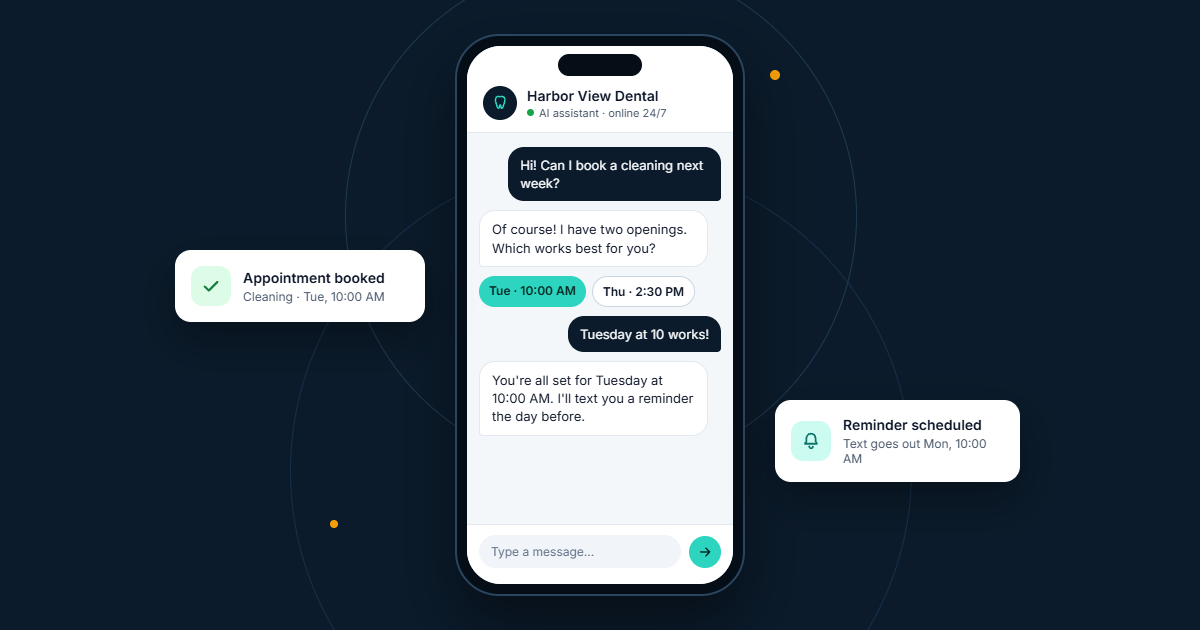
AI changes that. Tools like missed-call text-back instantly send a friendly text to anyone whose call goes unanswered, so the conversation keeps going instead of ending. AI-powered receptionists can go a step further: answering common questions, collecting patient details and even booking appointments around the clock.
The result is simple. Fewer lost callers, more booked chairs, and a front desk team that isn't stuck choosing between the patient in front of them and the one on the phone.
2. Smarter Scheduling and Fewer No-Shows
Empty chairs are expensive. AI-driven scheduling and reminder systems can send personalized confirmations by text and email, follow up automatically with patients who haven't confirmed, and fill last-minute openings by reaching out to patients on a waitlist.
Instead of your team spending hours a week on reminder calls, the system handles it in the background, and your schedule stays fuller with far less effort.
3. Follow-Up That Actually Happens
Most practices have a goldmine sitting in their patient database: overdue hygiene patients, unscheduled treatment plans and people who called once and never booked. The problem isn't that teams don't care. It's that follow-up is tedious and always gets pushed to the bottom of the list.
AI-powered automation never forgets. It can:
Reach out to patients who are overdue for cleanings
Nudge patients who were presented treatment but never scheduled
Re-engage leads who inquired but didn't book
Send these messages at the right time, in a personal, conversational tone
That kind of consistent follow-up turns existing patients and old leads into booked appointments, without adding a single hour to your team's week.
4. A Stronger Online Reputation on Autopilot
Before a new patient ever calls, they read your reviews. Your online reputation is now one of your most valuable marketing assets, and AI makes it much easier to build.
Automated reputation management can ask happy patients for a review right after their visit, when they're most likely to leave one. AI can also help you draft thoughtful, professional responses to reviews, good and bad, so every patient feels heard and prospective patients see a practice that cares.
More reviews, better ratings and faster responses all add up to more trust and more new-patient calls.
5. Marketing That Gets Smarter Over Time
Traditional marketing often feels like guesswork. You run an ad, hope it works and wait a month to find out. AI flips that around.
Modern ad platforms use AI to find the people most likely to need your services, adjust spending toward what's working and test different messages automatically. Pair that with a well-built marketing funnel, from the first ad click to a booked appointment, and you get a clear picture of exactly where your new patients come from and what each one costs.
AI can also help create content faster, from blog posts and social media captions to email newsletters, so your practice stays visible without you having to become a full-time marketer.
6. A Better Experience for Every Patient
Patients today expect the same convenience from their dentist that they get from every other business: quick answers, easy online booking and communication by text instead of phone tag.
AI makes that possible for practices of any size. A chat assistant on your website can answer questions at 10 p.m. Automated texts keep patients informed before and after their visits. Personalized messages make patients feel remembered rather than processed.
That smoother experience doesn't just win new patients. It keeps the ones you already have coming back and referring their friends and family.
What This Means for Your Practice
The dental practices that will thrive over the next few years won't necessarily be the biggest or the ones with the largest marketing budgets. They'll be the ones that use technology to work smarter: answering every call, following up with every lead, and giving every patient a great experience from the first click to the final visit.
The good news is that you don't need to become a tech expert to get there. The right systems can be set up once and then run quietly in the background while you focus on what you do best: taking care of patients.
Ready to See Where AI Can Help Your Practice?
At DevExec LLC, we help dental practices put these tools to work, from missed-call text-back and automated follow-up to reputation management and high-converting marketing funnels.
Not sure where to start? Get a free dental marketing audit. We'll take a look at how your practice is attracting, converting and keeping patients today, and show you exactly where AI and automation can make the biggest difference.
👉 Claim your free audit at devexecagency.com/devexec-dental-marketing-audit